
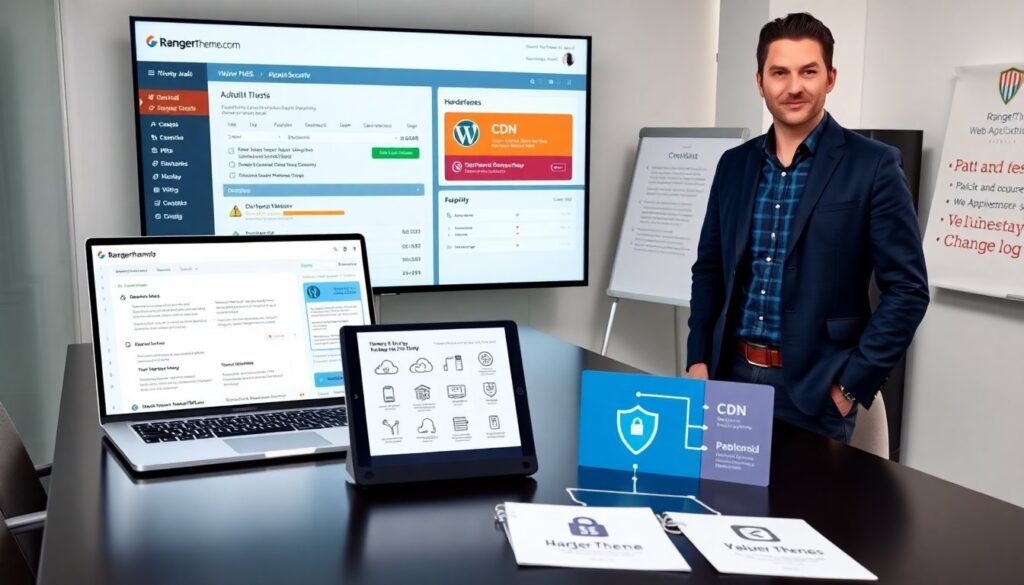
Rangertheme.com cybersecurity matters for any site that uses its themes. This audit highlights risk points and quick actions. It shows where to test, what to patch, and how to monitor. It gives clear steps that a site owner or admin can use. It keeps technical detail direct and actionable.
Key Takeaways
- Rangertheme.com cybersecurity requires regular theme updates and thorough testing to address vulnerabilities in PHP, JavaScript, and third-party plugins.
- Verify distribution integrity by using signed theme files or checksums to prevent tampering during theme downloads.
- Implement strong host security with updated PHP versions, strict file permissions, and two-factor authentication to protect admin areas.
- Remove demo importers and unused plugins, disable file editing in WordPress, and enforce prepared statements to harden theme security.
- Deploy perimeter defenses like Web Application Firewalls and CDNs, enable HTTPS with HSTS, and conduct continuous monitoring with regular vulnerability scans and file integrity checks.
- Establish a clear patch and response plan with assigned roles to handle vulnerabilities promptly and maintain ongoing security for Rangertheme.com themes.
At-A-Glance Security Profile For RangerTheme.com
Rangertheme.com cybersecurity appears mixed based on public indicators. The site uses common WordPress theme delivery and a CDN to speed files. A CDN can reduce attack surface for static assets. The theme package includes PHP, JavaScript, CSS, and optional demo import tools. Each component can carry a vulnerability.
A quick risk checklist shows several priorities. First, check theme update frequency. If the developer issues regular updates, the site shows active maintenance. Second, inspect the change log for security fixes. Third, verify whether the theme ships with third-party plugins. Bundled plugins often introduce risk.
The audit also checks distribution integrity. A site should sign theme files or publish checksums. Rangertheme.com cybersecurity gains when the provider publishes hashes or uses secure download links. Without this step, an attacker could tamper with packages during transit.
Next, examine support channels and disclosure policy. A clear vulnerability disclosure policy speeds patching. Rangertheme.com cybersecurity improves when the team accepts reports, responds quickly, and releases fixes. Finally, test sample themes in an isolated lab before live use. The lab should run current WordPress and a hardened server image. That test will reveal obvious issues without risking a production site.
Common Vulnerabilities To Check On Theme And Host
Rangertheme.com cybersecurity depends on both theme code and hosting setup. The most common theme issues include insecure file uploads, cross-site scripting, and improper sanitization of input. Developers sometimes include demo importers that accept remote files. Those importers can allow attackers to write PHP files. A simple test uploads harmless files and then attempts to access them.
Another common problem is outdated libraries. Themes often include JavaScript libraries with known flaws. A site should scan theme folders for old versions and update or replace them. Also check for eval() use and dynamic file inclusion. Those patterns increase risk.
On the host, weak permissions and outdated PHP versions create exploit paths. The server should run a supported PHP release. The hosting account must enforce file permissions that prevent public write access. The database user should have restricted privileges. Rangertheme.com cybersecurity improves when hosts enable process isolation and offer automatic updates.
Attackers also exploit default or weak credentials in admin areas. Admin credentials should use unique passwords and two-factor authentication. Rate limiting on login endpoints reduces brute force risk. Web application firewalls can block common attack patterns.
Finally, check for information exposure. Error pages and readme files sometimes reveal versions. Those files help an attacker craft a targeted exploit. Remove or restrict access to debug output and unused files. Regular scans for sensitive files reduce that exposure.
Step‑By‑Step Hardening And Continuous Monitoring Plan
Rangertheme.com cybersecurity improves with a short hardening plan and steady monitoring. The first step downloads the theme into a test environment. The tester runs static code analysis and dynamic checks. Use automated tools to flag insecure patterns and manual review for logic errors.
Step two applies immediate hardening. Remove demo importers and unused plugins. Disable file editing from the WordPress dashboard. Enforce strong file permissions and update the PHP runtime. Ensure the theme uses prepared statements and proper input escaping.
Step three configures authentication and access control. Enable two-factor authentication for all admin users. Limit admin access by IP where practical. Add rate limits to login endpoints. Rotate API keys and secrets that ship with the theme. Treat default keys as compromised.
Step four deploys perimeter defenses. Add a Web Application Firewall and set rules for common exploits. Use a CDN to absorb traffic spikes and reduce direct hits to the origin. Enable HTTPS with HSTS and perform TLS scans to confirm secure cipher suites. Those actions raise the cost for attackers.
Step five sets continuous monitoring. Schedule daily file integrity checks. The monitor must compare checksums and alert on unexpected changes. Run weekly vulnerability scans for known CVEs in bundled libraries. Log activity to a central system and review high-risk events.
Step six defines patch and response procedures. The team should assign roles for triage, patching, and communication. When a theme vulnerability appears, the team should take the affected site offline or apply a virtual patch if needed. Notify stakeholders and schedule a full remediation window.
Step seven documents and repeats. Keep a short security checklist with the above steps. Re-run tests after updates and before major site launches. Each iteration will increase confidence in Rangertheme.com cybersecurity and reduce surprise incidents.